
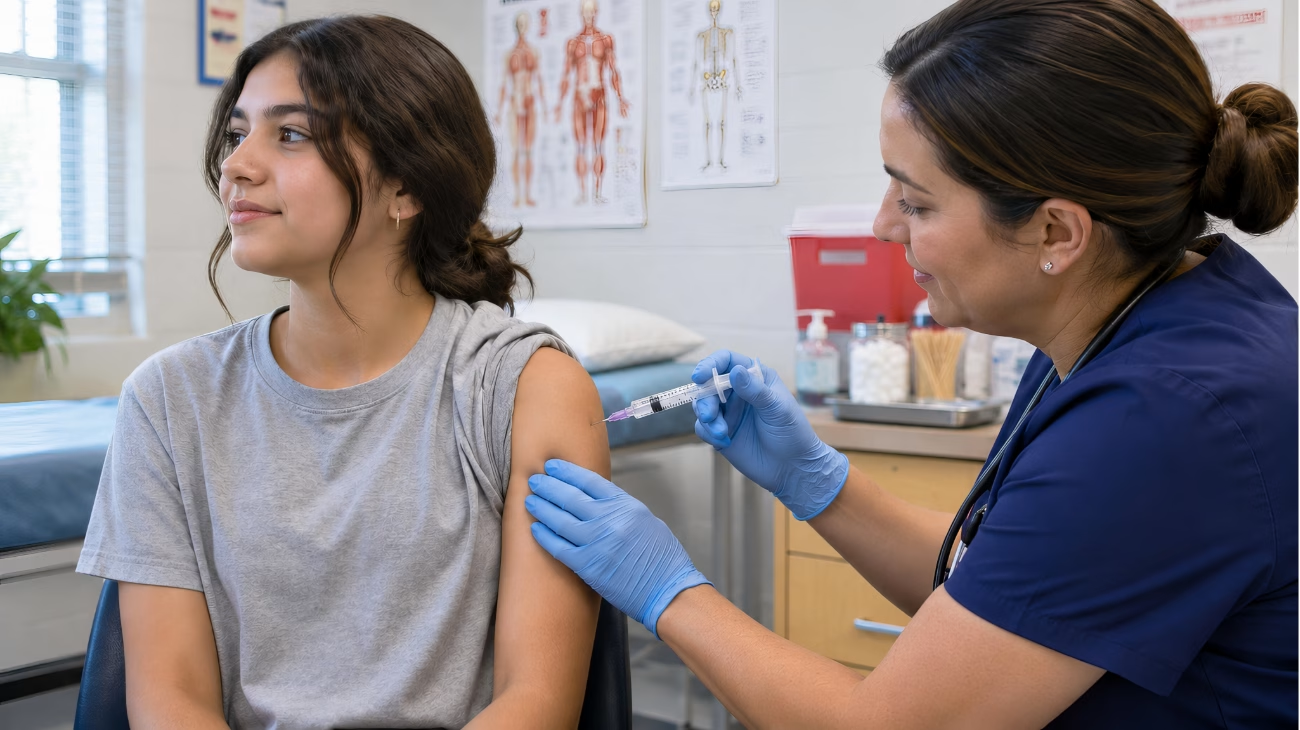
We are urging eligible young people across the city region to book their first MenB vaccination as soon as possible, as there are now only four weeks left to start the two-dose course before bookings for the first dose close at the end of December.
Anyone who delays getting their first dose risks missing out on the opportunity to get fully vaccinated against the meningococcal B (MenB) disease before the time-limited vaccination programme ends on 31st March 2027. As bookings for the first dose close on 31st December and the two doses must be given at least 28 days apart.
The one-off national MenB vaccination programme was introduced following several outbreaks and clusters of meningococcal B disease across England during 2026.
To be fully protected against this potentially life-threatening disease requires two doses of vaccine as protection from the first dose is limited. The second dose must be given at least 28 days after the first, followed by a further two weeks for the body to build a good level of immunity. This means the full vaccination course takes around six weeks from the first dose.
That’s why we are also urging anyone who has already had their first MenB vaccination but has not yet booked their second dose not to delay it any further. To ensure they are fully protected over the festive period, when many students travel home, socialise and spend time with family and friends.
Why MenB is so serious
Meningococcal B disease is a rare but dangerous infection that can lead to meningitis and blood poisoning (septicaemia). It can cause life-changing disabilities including amputations, hearing loss and brain damage, and is fatal in around one in 10 cases.
Symptoms can appear suddenly and include a high temperature, severe headache, stiff neck, sickness, confusion, seizures, extreme sleepiness and a rash that does not fade when pressed.
The bacteria spreads through close or prolonged contact, including kissing, sharing drinks or vapes, and living in shared accommodation. This means young people at university or residential further education are at increased risk, particularly during their first year away from home. First-year university students have a risk of meningococcal disease around seven times higher than their non-student peers.
Dr Manisha Kumar, Chief Clinical Officer for NHS Greater Manchester, said:
“We are approaching the final opportunity for eligible young people to start their MenB vaccination course, and we don’t want anyone to miss out.
“MenB disease can be devastating. Although it is rare, if you do catch it, it can cause life-changing illness within hours and, in some cases, can be fatal. The best protection comes from receiving both doses of the vaccine.
“Anyone who has not yet had their first vaccination needs to come forward as soon as possible before booking closes.
“We also want to remind anyone who has already had their first MenB vaccination not to put off getting their second dose. The festive season is often a time when young people are travelling, meeting up with friends and returning home from university, so it’s important to make sure you’re fully protected. Getting your second dose as soon as you’re eligible will help ensure you have the best possible protection in place before the Christmas break.”
Is the vaccine safe?
The MenB vaccine has an established safety record and is already offered routinely to babies through the NHS childhood vaccination programme. Evidence from the UK programme shows vaccination has led to around a 75% reduction in MenB disease among eligible vaccinated groups.
Who can get the vaccine?
The programme is available to:
- Young people born between 1st September 2007 and 31st August 2008
- People aged under 25 who started university for the first time in autumn 2026, including eligible international students
- People aged under 25 who started an eligible further education college for the first time and living in student accommodation
The vaccine is available through participating community pharmacies. Those who are eligible can book online via the NHS, find a walk-in vaccination site, or call 119 if they cannot book online.
What are the side effects?
Common side effects from the vaccine can include swelling, redness or tenderness where the vaccine was given, as well as a mild fever, nausea, headache or muscle aches. Over the counter pain relief such as paracetamol can help manage these symptoms.
For more information about meningitis visit the NHS website. Anyone concerned that they or a loved one may have meningitis should seek urgent medical help immediately.
Book a MenB vaccination appointment – NHS
Find a pharmacy offering MenB vaccination – NHS
